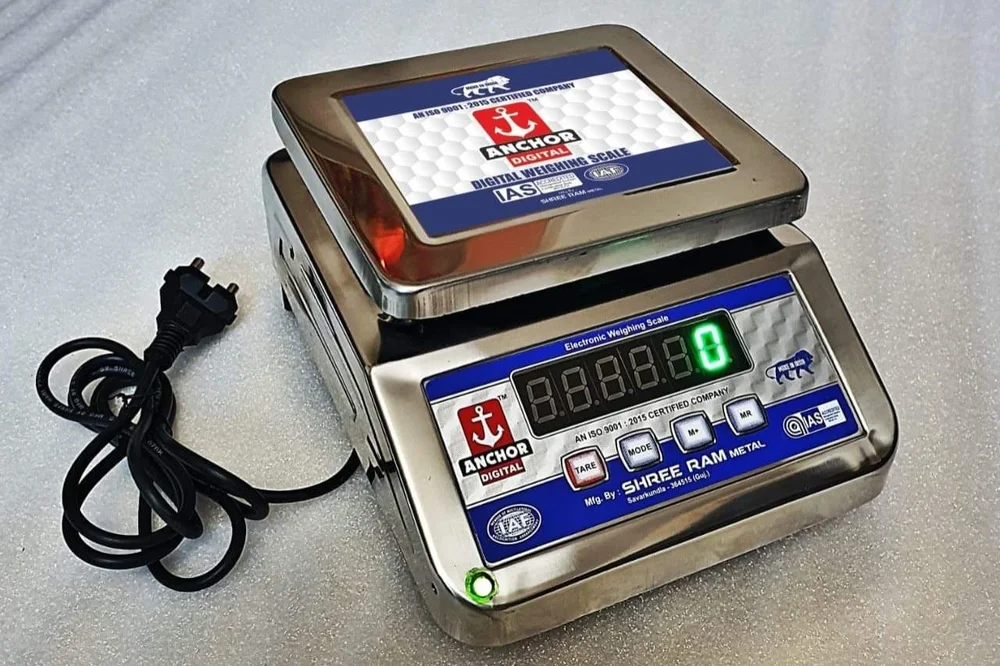
Buying a counter scale comes down to four decisions: capacity, accuracy, power and certification. Get those right and any well-built scale will serve you for years.
Capacity first. Most kirana and grocery counters are well served by 30 kg — big enough for bulk bags, small enough to keep gram-level pricing accurate. If you regularly weigh sacks, step up to a 60 kg counter scale rather than overloading a smaller one.
Accuracy is written as the scale's division size: a 30 kg scale with 5 g divisions prices loose goods fairly and passes billing scrutiny. Finer divisions cost more and matter mainly for expensive goods — dry fruits, saffron, tea.
Power cuts are a fact of trading life, so insist on a rechargeable battery rated for a full day. Finally, buy certified: a scale with an OIML-pattern approval and a calibration certificate protects you in any billing dispute.
If you bill loose goods at many different rates, consider a price-computing scale with PLU memories — it stores your rates and shows the customer the price as it weighs.