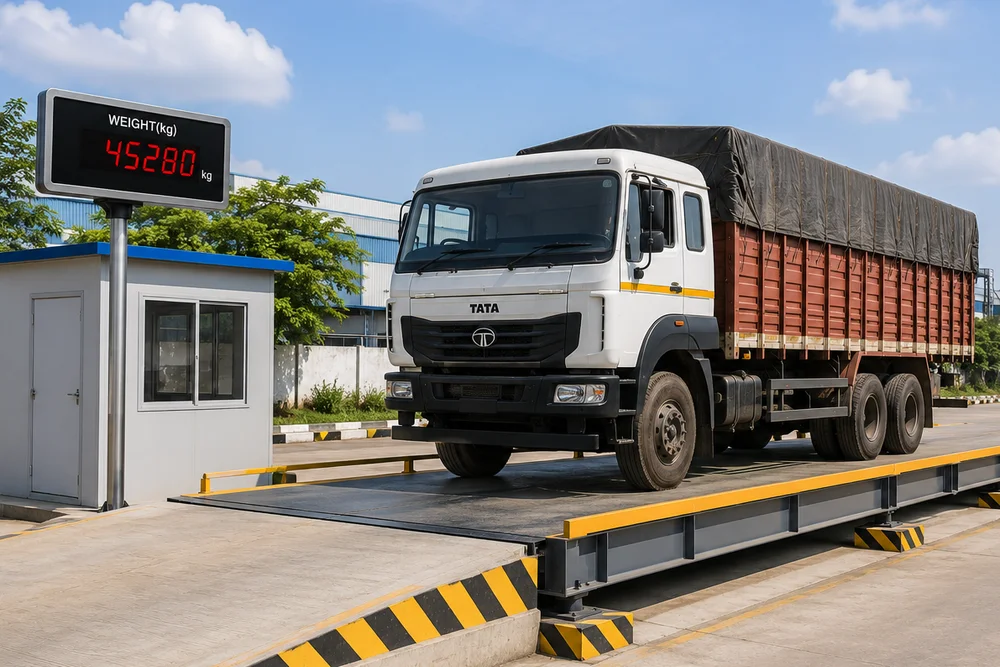
A weighbridge is a civil-engineering project as much as a weighing instrument, so the buying decision starts with your site, not the price list.
Pitless (surface-mounted) weighbridges sit on a shallow foundation with ramps at each end. They're faster to install, easier to maintain and simpler to relocate — the default choice when you have space for the ramps.
Pit-type weighbridges sit flush with the ground, so trucks cross with no ramps. They suit space-constrained sites and high-traffic gates, but need deeper civil work and drainage.
Portable axle pads are the third option: weigh pads placed under each axle for spot checks and enforcement. They trade some accuracy for total mobility.
Platform length should exceed your longest vehicle's wheelbase — 18 m covers most rigid trucks and trailers; 24 m covers multi-axle combinations. Modern bridges use digital IP68 load cells that tolerate waterlogging and lightning better than analog cells.
Expect two to four weeks from site survey to calibrated handover for a pitless installation, including civil work. Every quote we issue includes the site survey, civil drawings, installation, calibration and stamping support.